Co-founded by Palliative Care Pioneers
The Harvard Medical School Center for Palliative Care was co-founded in 1999 by Susan Block, MD, and the late J. Andrew Billings, MD.
Drs. Block and Billings were early pioneers of palliative care and became national leaders in the field’s development. Palliative care was recognized as a medical sub-specialty in the US in 2006.
Building a Field
Palliative care has its roots in the UK hospice movement, which began in the early 1960s in response to end-of-life needs of cancer patients who were often abandoned by medical professionals when treatment options failed. Clinicians increasingly recognized the need to address physical, psychosocial, and existential suffering among all people living with serious illness, whether imminently terminal or not.
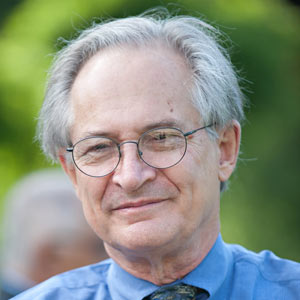
J. Andrew Billings, MD, began practicing internal medicine at Massachusetts General Hospital (MGH) in 1975, where he developed a strong clinical interest in the doctor-patient relationship. “A small but steadily growing cohort of patients who died at home fostered my clinical expertise in end-of-life care, provided an intellectual challenge, and also the opportunity for me to become an institutional leader and innovator,” he wrote in 2007 (J Pal Med, Vol 10, 6, 2007 (1258-1260). He directed the first hospice program in Massachusetts and established the Palliative Care Service at MGH in 2005.
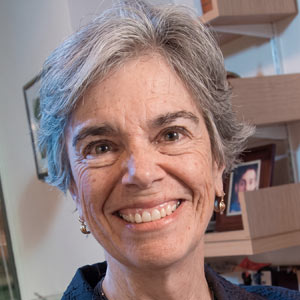
Susan Block, MD, trained in internal medicine and psychiatry in the late 1970s so she could provide both physical and emotional care to her patients. In 1998, she founded what became the Department of Supportive Oncology at Dana-Farber Cancer Institute (DFCI), which remains one of the few cancer center departments in the U.S. that combines psychosocial oncology, palliative care, and social work under one roof. Dr. Block subsequently created the Serious Illness Care Program at Ariadne Labs, which promotes a systems approach to improving end-of-life care.
Dr. Billings and Dr. Block met in 1971 and collaborated professionally throughout their 33-year marriage until Dr. Billings’ death in 2015.
Drs. Block and Billings received the Palliative Medicine Leadership Award from the Project on Death in America in recognition of their contributions to faculty development through the HMS Center for Palliative Care.
Interest in palliative care in the US lagged behind the UK, Australia, and Canada until the 1990s, when the Open Society Institute established the Project on Death in America and the Robert Wood Johnson Foundation created the Last Acts Initiative. Drs. Block and Billings played an active role in both programs, conducting national faculty development programs and helping to establish a strong academic base for the nascent field.
Meeting an Increasing Need
As interest in palliative care increased, Drs. Block and Billings were inundated with training requests by Harvard Medical School (HMS) faculty, residents, students, and nurses seeking to improve their abilities to respond to seriously ill patients’ psychological, emotional, and spiritual needs. They developed the curriculum for a faculty development program for physicians, nurses, and other healthcare professionals at Massachusetts General Hospital (MGH) and Brigham and Women’s Hospital (BWH), funded by an NIH education grant.
Based on the success of that program, Drs. Billings and Block established the Center for Palliative Care at HMS in 1999. Its first course, Palliative Care Education and Practice (PCEP), provided physicians and nurse educators from around the world with intensive learning experiences in teaching methods, clinical skills, and organizational development. Participants attended an initial eight-day, on-site program at HMS and then returned to their home institutions for six months to work on individual projects, supported by weekly email discussions with course participants. Participants then completed an additional seven days at HMS of experiential learning in communication, teaching methods, teamwork, and leadership.
Supported by a grant from the Robert Wood Johnson Foundation, the Center for Palliative Care opened its program to national and international healthcare professionals to meet the growing global need for palliative care specialists, educators, and leaders. In 2008, a pediatric track was implemented. This early course paved the way for a series of educational activities, as the Center saw its role of helping to educate the generation of clinicians that were going to lead the field.
In addition to PCEP, the Center’s course offerings expanded to include:
- Practical Aspects of Palliative Care (since 2003)
- Art & Science of Palliative Nursing (since 2003)
- Palliative Care for Hospitalists and Intensivists (2013-2017)
- Communication in Serious Illness (2015-2016, 2017- through Ariadne Labs)
In response to the professional development needs of a growing field, the Center introduced two new courses:
- Foundations of Palliative Care (launched in October 2025)
- Core Practice of Palliative Care (launched in May 2026)
Responding to the Needs of a Growing, Dynamic Field
Since the HMS Center for Palliative Care’s inception, nearly 4,000 medical students, physicians, nurses, social workers, chaplains, and other health professionals from 57 countries have participated in its programs. Through PCEP and its portfolio of courses, the Center has prepared interprofessional teams to deliver expert, compassionate care for over 25 years. With a focus on serious illness communication, whole person assessment and care, and state-of-the-art symptom management, the Center’s courses have evolved to meet the current needs of the field.
Positioning the Center for Future Impact
Leadership
In 2014-15, the HMS Center for Palliative Care transitioned leadership from its founders to the next generation. Vicki Jackson, MD, MPH, named Chief of the Division of Palliative Care at MGH when Dr. Billings stepped down, became co-director of the Center. James Tulsky, MD, who succeeded Dr. Block as Chair of the DFCI Department of Psychosocial Oncology and Palliative Care (now the Department of Supportive Oncology), and the inaugural Chief of the Division of Palliative Medicine at BWH, followed as co-director in soon thereafter.
In 2025, when Dr. Jackson left HMS to become the Physician-in-Chief at Boston Medical Center and Chair of the Department of Medicine at the Boston University Chobanian & Avedisian School of Medicine, Christine Ritchie, MD, MPH, a member of the Center’s Steering Committee, joined Dr. Tulsky as Co-Director. Dr. Ritchie is the Kenneth L. Minaker Endowed Chair in Geriatrics and Director of Research for the Division of Palliative Care and Geriatric Medicine at MGH. She directs the Center for Optimal Aging and Serious Illness Research at MGB and co-directs the Bridge the GapT32 program.
Research
As palliative care prioritized program development and access, educating the workforce was the top priority. However, for the field to truly move forward, CPC leaders recognized that the evidence base must grow and has sought to bring together the power of the HMS research community toward that goal. The Center introduced an annual Research Workshop in September 2023 that gathers palliative care investigators from across the Harvard Medical School network to share discovery, connect with colleagues, and explore collaborations. These connections have led to numerous shared projects and exploitation of our unique academic ecosystem. The Center also contributes to the training of palliative care researchers through two NIH grant-funded programs: Research Methods in Supportive Oncology and the Advanced Workshop on Research Skills in Oncology.
Community
The Center introduced formal membership in 2025, welcoming over 100 members in its inaugural year. Membership categories reflect the interprofessional composition of the Center’s community and span the Harvard Medical School hospital affiliates.
The Center hosts several seminars and workshops for the community, including the Clinical Case Seminar, Psychosocial Oncology Grand Rounds, and MGB Palliative Care, Aging, and Geriatric Medicine Grand Rounds.